
Ready-to-Move vs Under-Construction Flats in NCR: Costs and Risks
Updated October 18, 2026
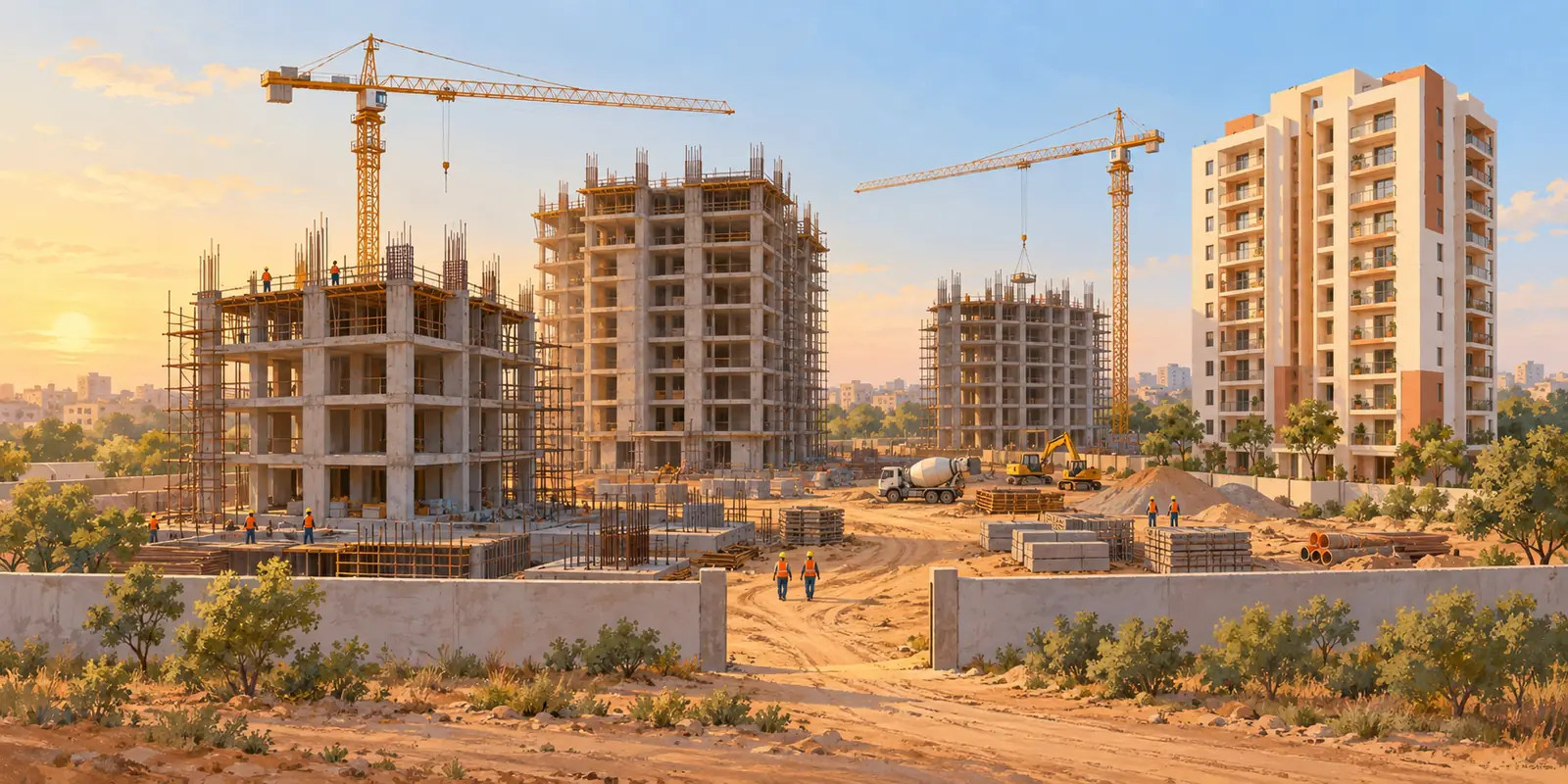
Choosing between a finished flat and one still being built is mostly a trade-off between price and certainty. The sticker price tells you little. GST, registration costs, the months you pay rent and EMI together, and the chance of a late handover all change what you actually spend.
This guide covers Delhi NCR. We checked the rules and figures on 18 October 2026. Where sources disagree or rules may change, we say so. Confirm the final numbers with your builder, lender and a property lawyer before you pay anything.
The short version
- GST: usually payable on an under-construction flat bought from a builder. Not payable on a flat sold after a completion certificate is issued.
- Stamp duty: the rate depends on the state, not on whether the flat is ready.
- Cash flow: an under-construction flat can mean paying rent and loan instalments together for a while.
- Risk: delay is the main risk of an under-construction flat. RERA gives you remedies, but they take effort to use.
GST: where the biggest difference sits
Under-construction homes bought from a developer attract GST at 5% for regular housing and 1% for affordable housing. Neither rate gives the buyer input tax credit. Sources report that the September 2025 GST rate overhaul did not change these property rates. Read the cost sheet carefully and ask the builder to confirm the rate in writing.
A flat sold after the completion certificate is issued carries no GST. The usual test is that the whole payment is received after the completion certificate or first occupation. If you have already paid instalments to the builder before the certificate, ask how the builder treats GST on those payments.
On a base price of ₹1 crore, 5% GST is ₹5 lakh. That is a real gap, and it is why an under-construction flat that looks cheaper on paper can end up costing about the same as a ready one.
The “affordable” 1% rate depends on a value ceiling and carpet-area limits. Most NCR flats in the main corridors will fall under the 5% rate, but check your own unit.
Stamp duty and registration
Stamp duty is a state levy. It applies to ready, under-construction and resale flats alike, and sources describe it as charged on the higher of the circle-rate value or the deal value. These are the commonly published rates for sale deeds:
| Location | Men | Women | Registration |
|---|---|---|---|
| Delhi | 6% | 4% | 1% |
| Noida, Greater Noida, Ghaziabad (UP) | 7% | 6% | 1% |
| Gurugram, Faridabad (Haryana, urban) | 7% | 5% | Slab-based; sources differ |
Treat the table as a starting point. Some sources describe a two-slab structure in Delhi, with higher rates above ₹25 lakh. Haryana’s registration fee is described as slab-based and capped in some sources, but as 1% in others. UP’s women’s concession also appears with different conditions in different sources. Check the current rate on the official state portal or with the sub-registrar before you budget.
Timing. I could not confirm a single NCR-wide rule on when stamp duty is paid on an under-construction flat. What is clear is that RERA bars a builder from taking more than 10% of the price before a written agreement for sale is signed and registered. Ask the builder and your lawyer these questions in writing:
- When will stamp duty be paid: on the agreement, or at the final deed?
- Which circle rate and which rate will apply at that point?
- Who bears any change in rates before registration?
If circle rates are revised during a multi-year build, your registration cost could move. That is a possibility to ask about, not a certainty.
Rent and EMI overlap
With a ready flat, your EMI usually starts around the time you get the keys. With an under-construction flat, you may pay rent for years while also servicing a loan. How much depends on how your lender releases money. Many lenders release funds in stages as construction progresses. Ask yours whether you pay interest only on the amount released so far or a full EMI, because terms differ by lender.
Here is an illustrative example, not a forecast. If you pay ₹35,000 a month in rent and ₹25,000 a month in loan interest on early disbursements, that is ₹60,000 a month. Over 24 months it comes to ₹14.4 lakh. Add any delay and the figure grows.
Before you commit, build a simple budget:
- Add your current rent and the loan servicing you expect during construction.
- Run it for the promised timeline, then for 12 months beyond it.
- If that stretched number strains your finances, a ready flat may suit you better.
Delay risk and RERA protections
If a builder misses the possession date in your agreement, Section 18 of RERA gives you two options. You can withdraw and get your money back with interest. Or you can stay in the project and receive interest for each month of delay. Most state rules set the interest rate at SBI’s highest MCLR plus 2%. Published estimates in 2026 range from roughly 10% to 11% a year, and the rate moves when SBI revises its MCLR. Check the rule in your state before relying on a figure.
As an illustration, if you have paid ₹40 lakh and the rate is 10.5%, the monthly interest is about ₹35,000. In practice you still have to file a complaint and wait for an order or settlement.
Other RERA protections worth knowing:
- Registered agreement: a builder cannot take more than 10% of the cost before signing and registering an agreement for sale.
- Project account: the builder must deposit 70% of the money collected into a separate account, usable only for that project’s construction and land cost.
- Defects: structural or workmanship defects reported within five years of possession must be fixed free of charge within 30 days.
Before booking, check that the project is registered with the relevant state RERA (Delhi, UP or Haryana). Also check the title documents, sanctioned building plan and commencement certificate. Registration does not guarantee on-time delivery, so look at the builder’s earlier projects as well.
Inspection checklist
Ready-to-move flat
- Ask for the completion or occupancy certificate and check it matches the tower and unit.
- Check that the project’s RERA registration is valid.
- Look for damp patches, seepage and cracks, especially around bathrooms, balconies and top floors.
- Test switches, plumbing, taps, drainage, doors and windows.
- Confirm water, power and parking arrangements, and ask about maintenance dues and any pending charges.
- Verify the title and ask for the paperwork behind any bank loan on the unit.
Under-construction flat
- Visit the site and compare progress with the payment stage being demanded.
- Read the agreement for sale: possession date, carpet area, specifications, delay interest and cancellation terms.
- Ask for a written breakdown of GST, stamp duty and every extra charge.
- Keep copies of all receipts, demand letters and emails.
- Before possession, inspect the finished flat against the agreed specifications and note any defects in writing.
How to decide
A ready flat suits you if you need to move soon, want to see exactly what you are buying, or want to avoid GST and the overlap of rent and EMI. An under-construction flat may suit you if you can absorb a delay, have verified the builder and project, and the price difference clearly covers GST and the extra carrying costs.
Whichever you pick, compare total cost: price, GST, stamp duty, registration, and rent paid during construction. Do not compare headline prices alone.
To compare options across NCR, you can search all properties on ADiHomes. If you are weighing corridors with a lot of new supply, the Dwarka Expressway guide and the Greater Noida West guide are useful starting points. Whichever you pick, ask each builder for RERA registration details and the possession date in writing.
Note: this article is general information, not legal, tax or financial advice. Tax rates, stamp duty and RERA rules can change, so confirm current figures with official sources and a qualified professional before you buy.
Sources
- GST on Under-Construction Flats Explained – Sunteck India
- GST on Property Purchase 2025-26 – TaxClue
- GST on Under-Construction Flats – Godrej Sepoque
- GST on Real Estate 2026 – FinLecture
- Stamp Duty & Registration Charges Delhi (2026) – HomeFirst
- Property Registration Charges in Delhi 2026 – Delhi Property Registration
- Stamp Duty and Registration Charges in Noida 2026 – Square Yards
- Stamp Duty in Ghaziabad 2026 – Prateek Group
- Uttar Pradesh Stamp Duty Calculator 2026 – Plotr Ai
- Stamp Duty and Registration Charges in Faridabad 2026 – Square Yards
- Haryana Stamp Duty and Registration Charges 2026 – Godrej Capital
- Faridabad Stamp Duty & Registration Charges 2026 – 2bigha
Updated 18 October 2026. This article is general information, not legal or financial advice; check current rules and project details before you decide.